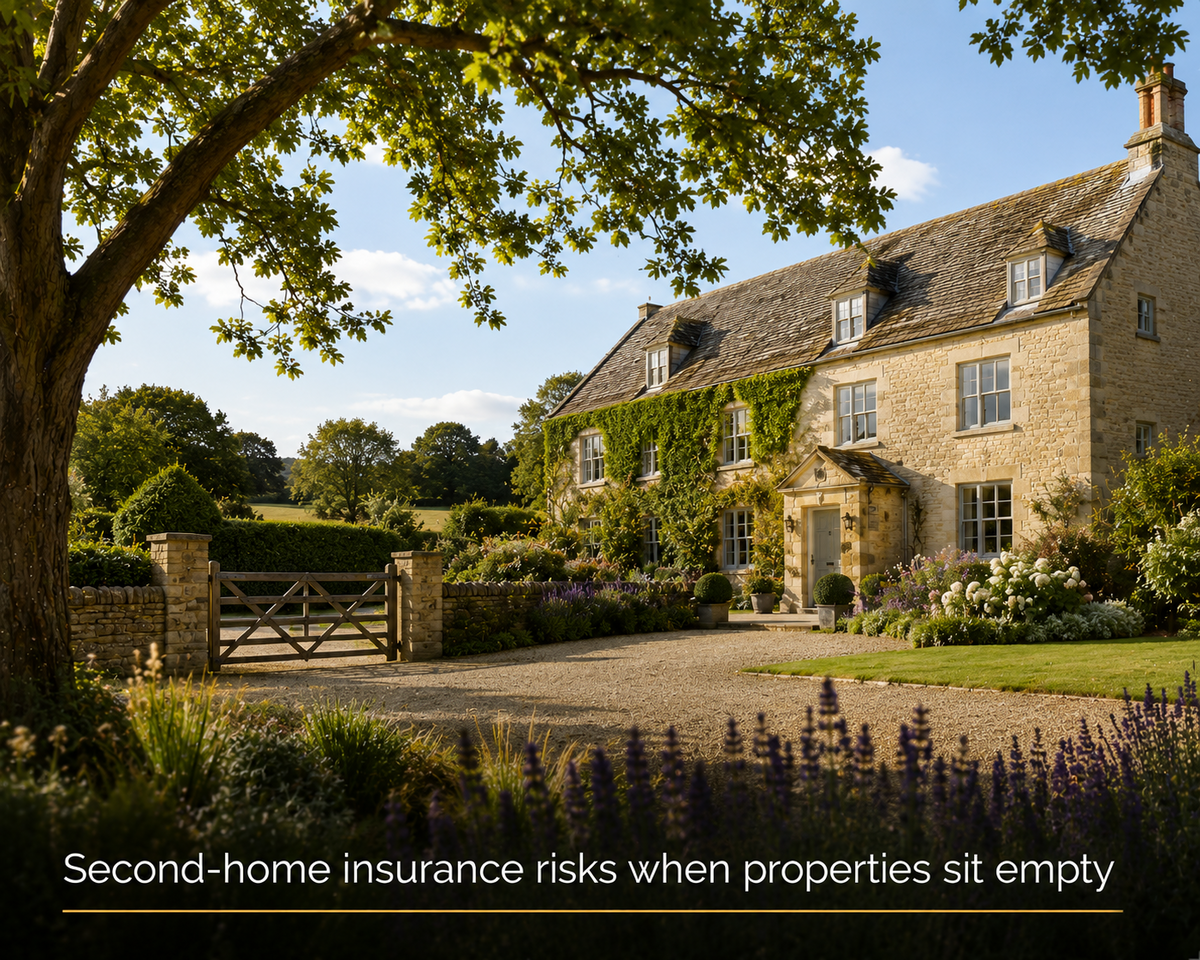
Many second-home owners assume their insurance policy functions exactly the same way whether the property is occupied full-time or left vacant for extended periods. In reality, insurers often apply very different expectations and conditions once a property becomes periodically unoccupied.
This is particularly relevant in the Cotswolds, where many homes are used seasonally, occupied intermittently, or left empty between visits.
After years overseeing buildings, operational risk, facilities, and property projects, one pattern becomes consistently clear: vacant properties experience problems differently from occupied homes. Small issues remain unnoticed longer, emergency response times increase, and routine operational failures can escalate significantly before anybody becomes aware of them.
Insurance providers understand this.
As a result, many policies include specific vacancy clauses and risk-management requirements designed to reduce the likelihood of major claims. Owners are often surprised to discover these obligations only after a problem occurs.
One of the most common requirements involves regular inspections. Many insurers expect properties to be physically checked at defined intervals during periods of non-occupancy. In some cases, owners may even need evidence that inspections have taken place.
This is where documentation becomes increasingly important. Simply carrying out inspections is often not enough if a claim later arises. Clear reporting, dated inspection records, photographs, maintenance logs, and evidence of preventative action can all help demonstrate that a property has been responsibly managed.
The reasoning is straightforward. Water leaks, heating failures, storm damage, or security breaches identified early are far less expensive than issues left unnoticed for weeks.
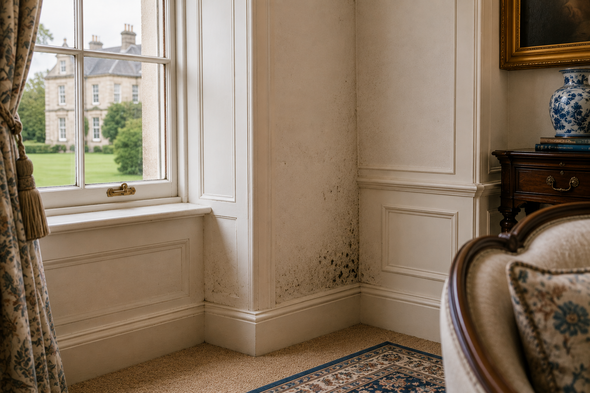
Water damage remains one of the greatest risks for vacant homes. A failed pipe or leaking appliance can cause extensive destruction remarkably quickly, particularly during winter months. Older Cotswold properties may contain vulnerable plumbing runs, historic heating systems, or areas difficult to monitor remotely.
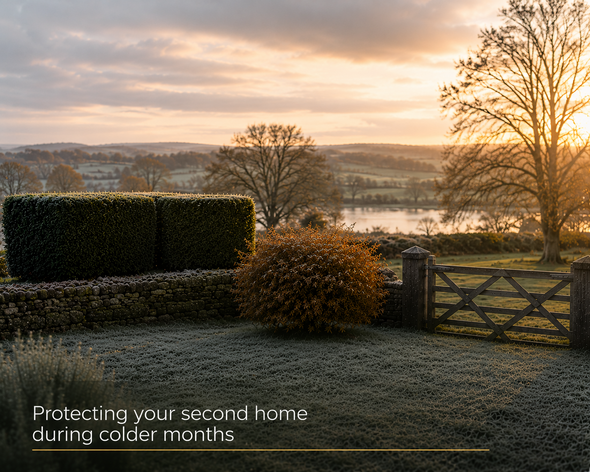
Heating management therefore becomes critically important. Some policies require a minimum background temperature to be maintained during cold weather, while others may require systems to be fully drained if the property is left vacant for extended periods. Maintaining accurate records of temperature monitoring, contractor visits, and system servicing can also become valuable if questions later arise regarding compliance with policy conditions.
Security conditions are equally common. Alarm systems, locks, external lighting, and keyholder arrangements may all form part of the insurer’s expectations. Rural properties can be particularly vulnerable due to isolation, limited neighbour visibility, and inconsistent occupancy patterns.
Storm response is another increasingly important issue. Mature trees, stone roofs, drainage systems, and exposed rural settings all create potential vulnerabilities during periods of severe weather. If damage occurs while the property sits empty, delays in identifying the issue can substantially increase repair costs. Rapid post-storm inspections, photographic reporting, and documented follow-up actions can help owners both limit damage escalation and maintain a clear record of how the property was managed.
For listed properties, the stakes are often even higher. Specialist materials, traditional construction methods, and conservation requirements can significantly increase restoration complexity and expense following preventable damage.
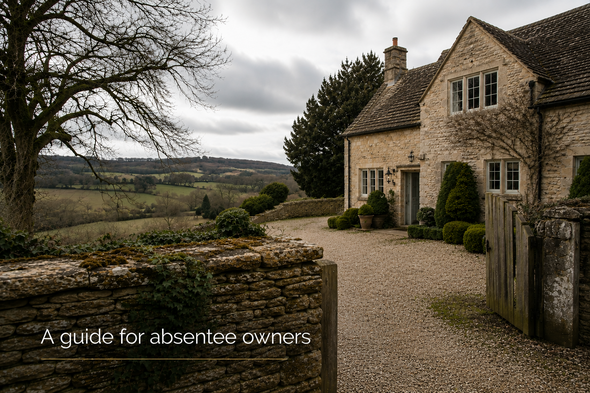
The challenge for absentee owners is not usually understanding the importance of these risks. It is managing them consistently from a distance.
This is where structured property stewardship becomes valuable. Regular inspections, preventative maintenance, contractor coordination, detailed reporting, photographic documentation, and rapid local response all help reduce operational risk while supporting insurance compliance.
Importantly, stewardship also provides owners with visibility. Rather than discovering problems only after arriving at the property, owners receive ongoing awareness of how the home is performing throughout the year through organised updates, inspection summaries, and documented condition reporting.
The goal is not simply avoiding claims. It is reducing the likelihood that emergencies occur in the first place — while also ensuring there is a clear record demonstrating responsible oversight if issues do arise.
Well-maintained and properly monitored properties generally experience fewer serious incidents over time. Preventative management almost always proves less disruptive — and less expensive — than reactive repairs following major damage.
For second-home owners in the Cotswolds, proper oversight is increasingly becoming less of a luxury and more of a practical necessity. Properties left unattended still require management, particularly when they are older, rural, or architecturally significant.
Insurance can provide financial protection after something goes wrong. Good stewardship helps reduce the chances of it happening at all — and provides owners with confidence that their property is being carefully monitored even when they are elsewhere.
Hanbury Property Stewardship Ltd.
Property oversight, contractor coordination, and long-term care for absentee owners and second homes across the Cotswolds.
[email protected]