Many owners of second homes assume that turning the heating off completely while they are away is a sensible way to reduce running costs.
At first glance, this seems logical. If nobody is occupying the property, why pay to heat it?
In practice, however, leaving a house entirely unheated for extended periods can create a range of problems that affect the building fabric, internal finishes, contents, and even insurance compliance. This is particularly true in the UK, where our climate is characterised less by extreme temperatures and more by persistent moisture and humidity.
After years overseeing buildings, facilities, and property operations, one lesson consistently emerges: buildings perform best when they remain occupied, ventilated, and maintained within a stable environmental range.
A house that sits cold and unattended for weeks or months often behaves very differently.
Moisture Is Usually the Real Enemy
When people think about heating, they naturally think about warmth and comfort. Buildings, however, care just as much about moisture control.
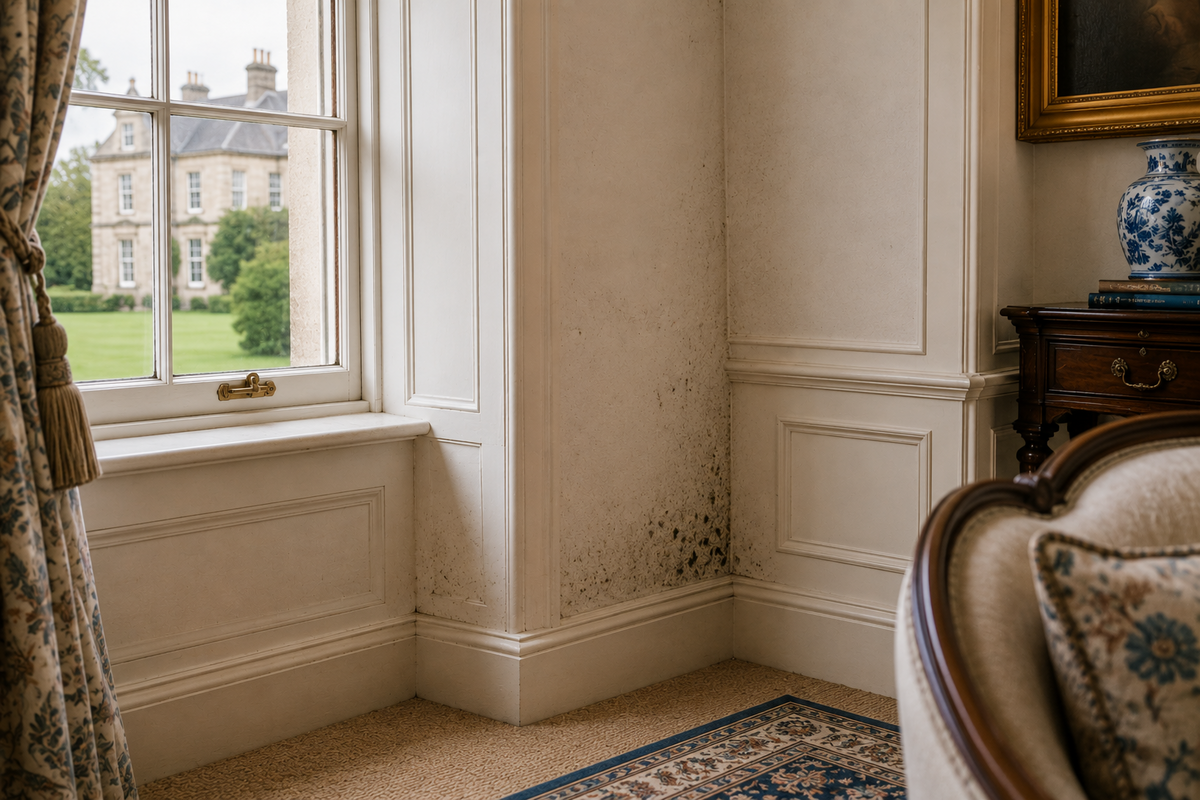
Cold surfaces attract condensation. When warm, humid air encounters cold walls, windows, ceilings, or pipework, moisture can form. Over time, this can contribute to mould growth, mildew, staining, and deterioration of finishes, furniture artwork and other valuable belongings.
Even during warmer months, unheated properties can experience condensation problems.
Summer air in the UK often carries significant moisture. If a building remains closed up with little environmental control, humidity levels can rise unexpectedly. Owners are frequently surprised to discover mould growth during periods when they assumed cold temperatures were not a concern.
The issue is often not the temperature itself, but the relationship between temperature, humidity, and ventilation.
Hidden Damage Can Develop Slowly
One of the challenges with vacant properties is that problems rarely announce themselves.
A small amount of condensation behind furniture, inside cupboards, or within roof spaces may go unnoticed for months or even years. Timber joinery can expand and contract excessively. Decorations and artwork may begin to deteriorate. Musty odours can develop. Soft furnishings, clothing, and stored belongings can absorb moisture.
By the time an owner returns or has a good look around, the underlying issue may have been developing for a considerable period. Regular inspections are often the only reliable way of identifying these early warning signs before they become expensive remediation projects. Knowing what to look for is critical.
Protecting Plumbing Systems
Winter presents the most obvious risk.
Even in southern England, prolonged cold spells can create conditions where pipes, tanks, valves, and heating components are vulnerable to freezing. A burst pipe in an occupied house is usually discovered quickly. A burst pipe in an unoccupied property can continue leaking for days or even weeks before anybody becomes aware of it. The resulting damage can be substantial, affecting flooring, ceilings, plasterwork, joinery, electrical systems, and contents.
Maintaining a background temperature significantly reduces this risk and is often recommended by insurers during periods of vacancy.
Buildings Prefer Stability
Many traditional properties found throughout the Cotswolds were built using materials that naturally absorb and release moisture. Stone walls, timber structures, lime plasters, and older construction methods generally perform best when environmental conditions remain relatively stable. Repeated cycles of heating, cooling, dampness, and drying can place unnecessary stress on these materials.
While modern homes are not immune, older buildings can be particularly sensitive to long periods of neglect or environmental fluctuation. The goal is rarely to keep an empty house warm for comfort. The objective is to maintain a consistent environment that protects the building.
Insurance Considerations
Owners are often surprised to learn that insurers may have specific expectations regarding vacant properties. Requirements can vary between policies, but many insurers expect reasonable precautions to be taken to reduce foreseeable risks. This may include maintaining minimum temperatures during winter, draining systems under certain circumstances, conducting regular inspections, or keeping records of property visits. Failure to comply with these requirements can sometimes complicate claims following a loss.
Understanding these obligations before a problem occurs is far preferable to discovering them afterwards.
The Value of Regular Oversight
Perhaps the greatest risk associated with an unheated property is not the temperature itself.
It is the absence of visibility. Buildings are constantly changing. Small maintenance issues, moisture concerns, equipment failures, pest activity, storm damage, and security vulnerabilities can all develop between visits. Regular inspections provide owners with an objective understanding of the property’s condition and create opportunities to identify issues before they escalate. Detailed reporting, photographic records, environmental observations, and proactive maintenance planning can often prevent problems that would otherwise remain hidden until significant damage has occurred.
For owners who spend long periods away from their property, maintaining a stable environment and ensuring regular oversight is often one of the simplest and most effective ways to protect both the building and the investment it represents.
If you own a second home or property in the Cotswolds and require trusted local oversight, Hanbury Property Stewardship Ltd. provides tailored support for absentee owners throughout the region.
Hanbury Property Stewardship Ltd.
Property oversight, contractor coordination, and long-term care for second homes across the Cotswolds.
[email protected]
www.hanburypropertystewardship.co.uk